
Team Coaching
Organizational team coaching: from friction to execution
Fewer obstacles, more action.
When does a team need team coaching?
If you recognize three or more of the following, the problem isn’t the individuals; it’s the way they work together. Conversely, if the issue is isolated to a specific executive, 1:1 executive & leadership coaching is the more appropriate solution.
| What you see in daily operations | What is actually happening | What we work on |
|---|---|---|
| Decisions keep looping back to the CEO | It’s unclear who has the authority to decide what | Decision-making map and boundaries of responsibility |
| Sales and Production are "fighting" | The two teams are rewarded for conflicting goals | Goal alignment and shared commitment |
| Meetings end without a decision | There is no agreed-upon process for closing topics | Meeting protocol and commitment rules |
| No one says the obvious | Low psychological safety | Structured dialogue facilitated by a neutral third party |
| Good talent is leaving | Effort isn't translating into tangible results | Removing workflow bottlenecks |
| Changes don't "stick" | The team wasn't involved in designing them | Co-creation of new operational rules |
Team coaching, team building, or training?
These three do not compete. Team building solves a relationship problem; training solves a knowledge problem; team coaching solves an operational problem. If your team knows what to do and gets along, but still gets stuck, the issue is operational. For the theoretical basis of this method, see our detailed guide on what team coaching is and how it is applied.
Τα τρία δεν ανταγωνίζονται. Ένα team building λύνει πρόβλημα σχέσεων· μια εκπαίδευση λύνει πρόβλημα γνώσης· το team coaching λύνει πρόβλημα λειτουργίας. Αν η ομάδα σας ξέρει τι πρέπει να κάνει και συμπαθιέται, αλλά παρ’ όλα αυτά κολλάει, το θέμα είναι λειτουργικό.
| Criteria | Team Coaching | Team Building | Training |
|---|---|---|---|
| Goal | Changing how the team decides and executes | Improving climate and rapport | Transferring specific knowledge or skills |
| Duration | 3–6 months, recurring sessions | One day or a single event | 1–3 days |
| Subject Matter | Real, current team issues | Off-site activities | Program curriculum |
| Provider's Role | Facilitator – does not provide ready-made solutions | Experience organizer | Instructor |
| What remains afterward | New, applied rules of collaboration | Good vibes, usually temporary | Knowledge, if applied |
| Measurable in | Decision speed, completed projects, turnover | Hard to measure | Knowledge assessment |
Our 6-Step fast-track process
How we move your team from “stalled” to “shipped.”

The reality check
We look at the gap between your big goals (like “30% growth”) and what’s actually happening on the ground. No vague visions—just goals that actually show up in your profits.

Call out the “hidden problems”
We bring the secret frustrations into the light—like Sales promising features that Product never agreed to. No more “playing nice” while you’re losing revenue.

Find the true roadblock
You might think execution is just “slow,” but we find the real culprit—like a 47-day email chain because no one was in charge. We fix the system, not the people.

Pick one big win
We choose one specific rule to change in 30 days. No vague “let’s collaborate better”—just clear, non-negotiable standards for how you work.

The “pre-work” handshake
We set up one simple ritual (like a 30-minute sign-off) to make sure everyone agrees before the work starts. This ends the cycle of “doing it over.”

Full speed ahead
Your team starts making big calls in 48 hours. They use the rules we built together to launch projects and grow revenue—without the CEO having to step in.
Delivery formats
Work can be done Live and Online, and in some cases by phone. Contact us to discuss the context of each option.
In-house or at our premises
It may also be held online. Let’s discuss this.

Targeted corporate retreat
We take care of all the organization and services.
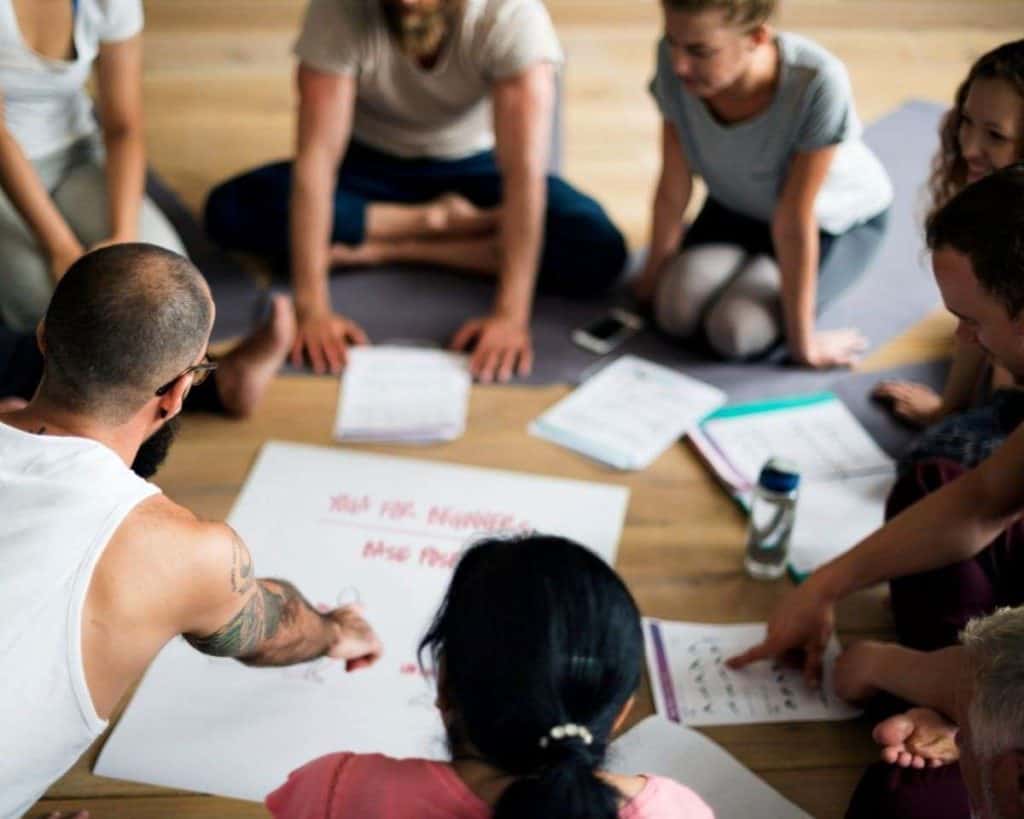
Short-time specialized workshop
Can be held Live or Online for a topic. E.g., for 8-hours or other.

Remote support for individuals or groups
Tailor-made, specific range of topics, long-term.

What we deliver
At the end of the program, the team walks away with the following deliverables.
(Note: To maintain momentum afterward, we recommend accountability coaching. If the team is a family business, see our family business coaching.)
- Decision map: Who decides what, who they consult, and who is merely informed.
- Meeting protocol: How a meeting is opened, closed, and documented.
- Team agreement: Written rules of collaboration co-created by the team itself.
- Obstacle list: Includes an owner and a deadline for each item – not just a list of complaints.
- Two measurements: Initial and final, based on metrics chosen by leadership (e.g., time from proposal to decision, percentage of projects on schedule).
- Brief report to leadership: What changed, what is pending, and what is recommended.
Results: A real example
- No role explicitly had the authority to approve intermediate actions.
- The average time from “ready” to “ready for use” was 37 days, almost entirely due to email chains and waiting.
Who it’s for – and who it’s not for
- The team has a stable composition and a shared goal for the next 6+ months.
- The leader participates directly, rather than just "sending" the team.
- There is a genuine willingness to change processes, not just behaviors.
- The goal is to "fix" a specific individual (in which case, 1:1 coaching or an administrative decision is indicated).
- There is an active labor dispute or compliance issue (that is a matter for legal/HR, not a coach).
- Leadership has already decided the outcome and just wants validation.
- The problem is purely financial or operational. (In this case, start with a business performance review or 1:1 small business consulting).
In this case, start with a business performance review or 1:1 small business consulting.
Investment & duration
The final proposal is shaped after a free 20-minute discovery call, depending on your specific needs and details.
For smaller organizations, see our executive coaching for SMEs. We also offer business mentoring for entrepreneurs.)
| Format | Duration | Team Size | Indicative Investment |
|---|---|---|---|
| Single-topic workshop | 4–8 hours, one day | Up to 15 people | From €750 |
| Team coaching program | 6 sessions / 3 months | 5–12 people | From €1,200 |
| Corporate retreat | 1–2 days + follow-up | 8–30 people | From €2,000 (excluding accommodation) |
| Remote support | Rolling, monthly | Flexible | From €450 / 3 months, or ad-hoc model |
Your coach
Christos Vasilopoulos & Partners
Business Strategy, Digital Consulting & Executive Coaching
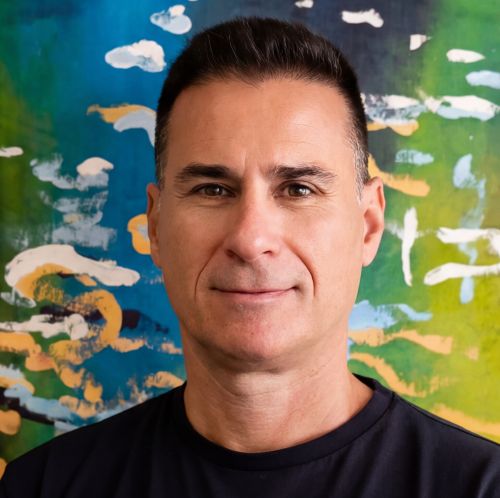
Christos Vasilopoulos is a strategic business consultant with over 23 years of experience in business development through analytical problem-solving and digital innovation.
As founder and director of Groowise.com since 2005, Christos consistently provides high-impact solutions in digital marketing, business consulting, and strategic growth, helping organizations navigate the complexities of the modern market.
This extensive background allows Christos to bridge the gap between technical infrastructure and high-level business goals, ensuring that marketing and operational strategies are not just theoretical, but functional and scalable.
To complement his strategic acumen, Christos is an ICF-certified coach with additional certification in Team Coaching (Advanced Accreditation in Team Coaching) from the Team Coaching Global Alliance, USA.
This dual expertise allows him to address the human dynamics that often delay corporate goals. In 2023, he published the book/ebook “Fear, That Liar“, providing a structured approach to overcoming professional obstacles.
They said for our coaching services

Frequently asked questions
What is the difference between team coaching and team building?
Team building improves the climate through an off-site experience. Team coaching works on real, current team issues and changes how the team decides and executes. The former lasts one day, the latter 3–6 months.
How many people can the team have?
For a team coaching program, ideally 5–12 people so everyone can participate meaningfully. For a workshop or retreat, up to 30 with an adapted structure.
How long does a program last?
Typically 6 sessions over 3 months. The first changes in decision-making are usually seen within the first month; stabilizing the new rules requires the full timeframe.
Does the director/CEO have to participate?
Yes, when the target team is their direct team. The way the leader makes decisions is part of the system; without them, agreements hold no weight.
What if some team members resist?
It is expected and useful. Resistance usually points to where the real obstacle lies. We work with voluntary participation in the dialogue and an explicit confidentiality agreement from the very first meeting.
Is it done online?
Yes. Sessions can be held in-house, at our location, as a retreat, or entirely online. Online works well for distributed teams, featuring slightly shorter session durations and more frequent meetings.
What remains with the company after it ends?
A decision map, meeting protocol, written team agreement, obstacle list with an owner and deadline, and two measurements (initial/final) on the metrics chosen by leadership.
Is what is said confidential?
Everything said in the session stays with the team. Leadership is informed of patterns and agreements, never attributed statements from individuals. This commitment strictly adheres to the ICF Code of Ethics.
Next step
If you are losing hours in meetings without results, we can help. Let’s discuss it. Fill out the form or book an appointment. We will provide a clear, tailored proposal once we understand exactly what your team needs.